Few countries have a relationship with silver as long and as rich as Peru’s. For thousands of years, the people of the Andes have mined, shaped and honored this metal, and today Peruvian silversmiths are known around the world for jewelry that combines ancient symbolism with remarkable technical skill. Here is a look at where that tradition comes from and how it lives on.
Metalwork before the Inca
Long before the Inca Empire, Andean cultures were master metalworkers. The Chavín, the Moche of the northern coast, the Sicán and later the Chimú all produced extraordinary pieces in gold, silver and copper: ear spools, crowns, nose ornaments, ceremonial knives and vessels. These artisans hammered metal into thin sheets, embossed it from behind to create relief designs, joined pieces by soldering and developed early alloys and gilding techniques.
For these cultures, precious metals were not money in the modern sense. They were sacred materials, worn by rulers and priests and buried with them as a sign of their connection to the divine.
The tears of the moon
The Inca inherited and refined these skills. In Inca belief, gold was associated with Inti, the sun, and silver with Mama Quilla, the moon. A well-known Andean saying describes gold as the sweat of the sun and silver as the tears of the moon. Silver was linked to the feminine, to the night sky and to the cycles of time, and it adorned temples, ceremonial objects and the clothing of the nobility.
Inca metalsmiths were highly respected specialists. Many of the finest craftsmen of the conquered Chimú kingdom were brought to Cusco to work for the empire, carrying the coastal metalworking traditions into the heart of the Andes.
Colonial silver and a new fusion
With the Spanish conquest in the sixteenth century, silver took on a new and much harsher role. The Viceroyalty of Peru, which then included the great mines of Potosí in present-day Bolivia, became one of the world’s main sources of silver, and enormous quantities were shipped to Europe and Asia.
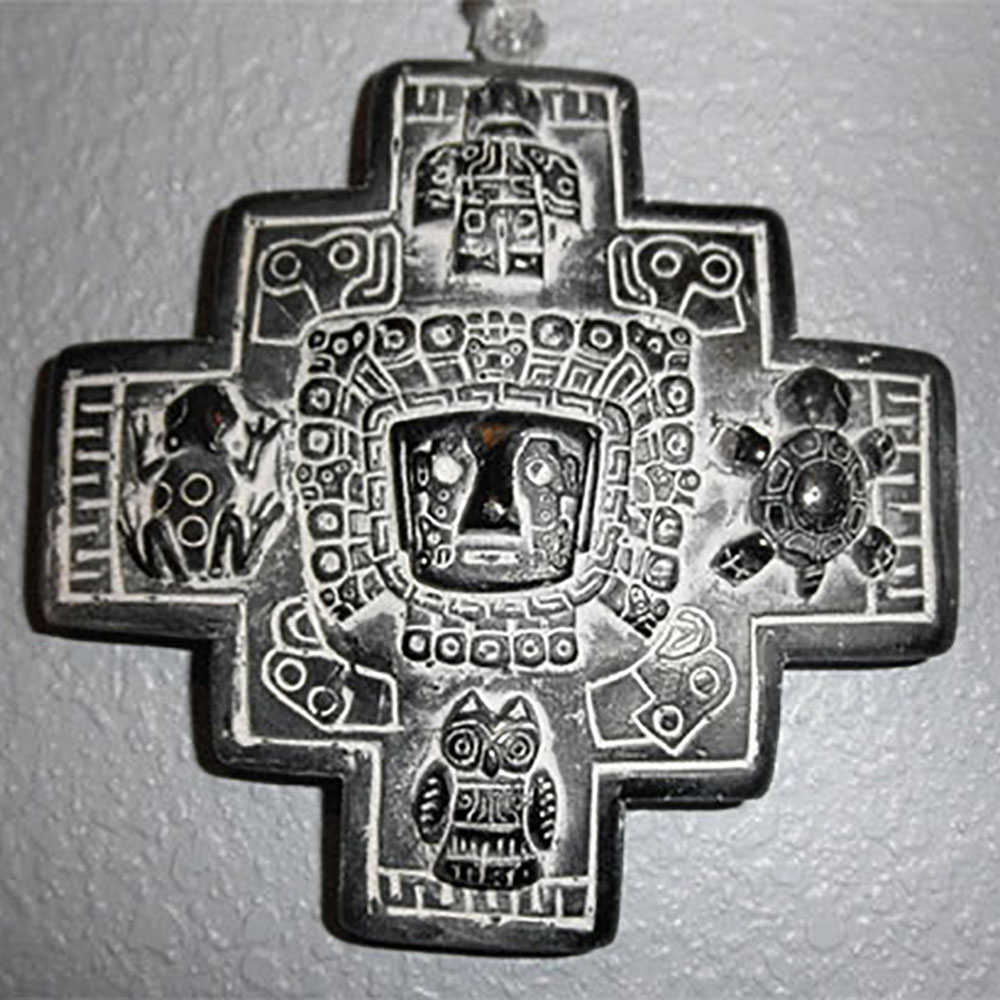
The period was marked by forced labor and great suffering. At the same time, it gave rise to a new artistic tradition. Indigenous and mestizo silversmiths learned European techniques and styles and combined them with Andean motifs, producing church ornaments, household objects and jewelry that are unmistakably Peruvian. Flowers and birds of the Andes appear next to baroque scrolls; Andean symbols hide inside Christian designs.
Filigree: lace made of silver
One of the most admired Peruvian techniques is filigree, known in Spanish as filigrana. The art of building designs from fine threads of metal arrived in Peru through Spain, which had itself inherited it from much older traditions in Asia and the Mediterranean. Peruvian artisans made it their own.
The town of Catacaos, near Piura on Peru’s northern coast, is the most famous center of filigree in the country, and its filigree was declared part of Peru’s National Cultural Heritage in 2010. Filigree is also an important tradition in Ayacucho and other Andean towns.
Making filigree is slow, patient work:
- Preparing the wire. Silver is melted, cast into a bar and drawn through progressively smaller holes until it becomes a thread, sometimes as fine as a hair. Two threads are often twisted together and flattened to create texture and sparkle.
- Building the frame. The artisan shapes a thicker wire into the outline of the design: a flower, a leaf, a butterfly, a teardrop.
- Filling the design. Using tweezers, the fine wire is coiled and bent into tiny spirals and loops, which are fitted one by one inside the frame.
- Soldering. The pieces are joined with solder and a small flame, a delicate step where too much heat can melt the fine threads.
- Finishing. The piece is cleaned, shaped, polished and sometimes plated in gold, revealing the light, lace-like effect filigree is known for.
A single pair of earrings can take hours or even days, and the best filigree artisans spend many years learning the craft, often from their parents and grandparents.
Other Peruvian silver techniques
Filigree is only one part of the story. Peruvian silversmiths also work with:
- Repoussé and chasing, hammering designs into silver from the back and refining them from the front, a technique with roots in pre-Inca metalwork.
- Stone setting and inlay, combining silver with stones found in the Andes and beyond, such as obsidian, spondylus shell, Andean opal, chrysocolla and turquoise.
- Oxidizing, darkening the recessed areas of a design to make carved and textured details stand out.
A note on silver quality
Pure silver is too soft for everyday jewelry, so it is alloyed with a small amount of another metal, usually copper. Sterling silver, stamped 925, contains 92.5% silver. Many Andean silversmiths also work in 950 silver, which contains 95% silver and has a slightly softer, whiter shine. Look for the stamp on the clasp or the back of the piece.
Caring for your silver
Silver naturally tarnishes when it reacts with the air, but it is easy to care for. Store each piece in a soft pouch or closed box, put it on after perfume and lotions, and remove it before swimming or cleaning. To restore its shine, gently rub it with a silver polishing cloth. Filigree should be treated with extra care: avoid harsh dips and brushes that can bend the fine threads.
Handcrafted in Peru: the Ilaria collection
All of our Ilaria jewelry is made in Peru, where the house’s silversmiths carry this long tradition into contemporary designs. Each piece is handcrafted in sterling silver, often combined with natural stones, fine openwork and filigree.
Andean names, Andean stones. The Pucara pieces pair silver with obsidian and tiger’s eye and include the Pucara Bracelet, Pucara Ilaria Bracelet, Pucara Sami Bracelet and Pucara Earrings. The clean, all-silver Pucllana line includes the Pucllana Bracelet, Pucllana Puka Bracelet and Pucllana Tika Earrings.
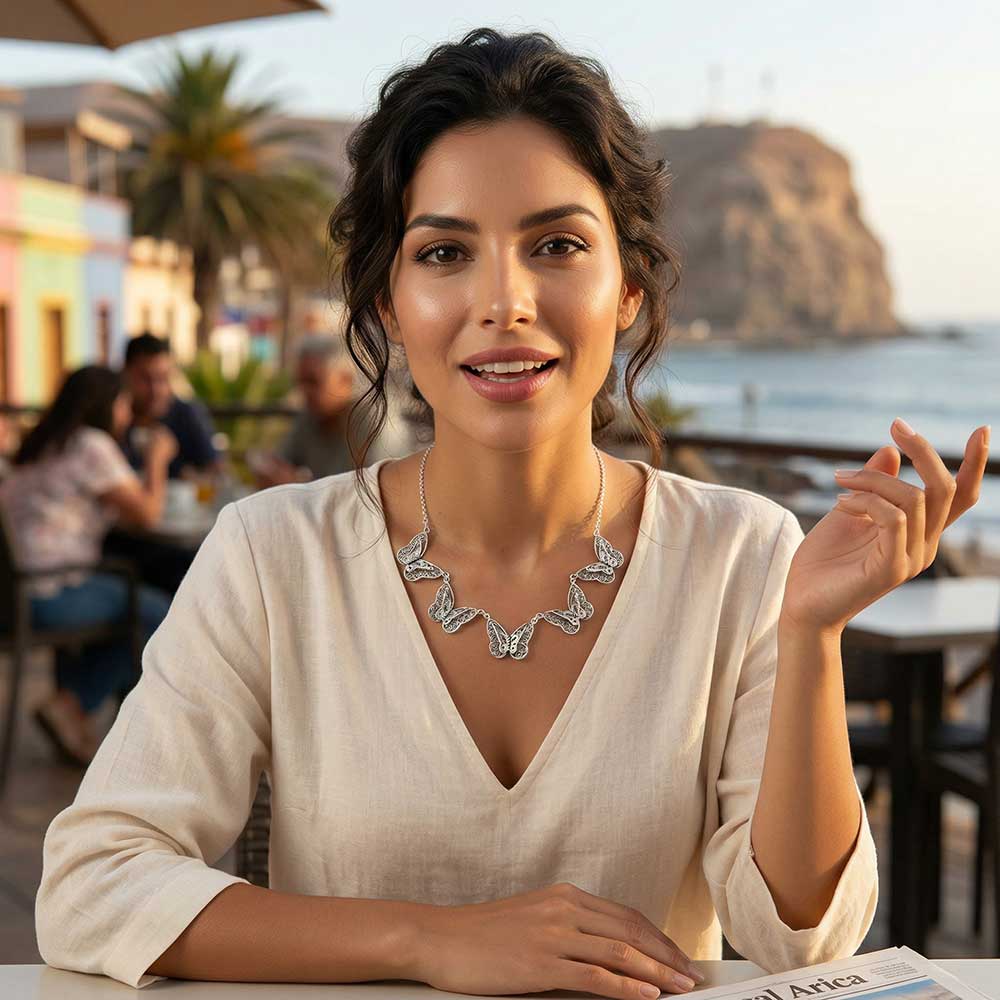
Nature in silver. The Mia butterflies show off the openwork and filigree described above, alongside the Eva leaves, the Carolina hearts, the Aitana pieces set with green malachite, the Catalina Ring and the Delfos collection.
Bold cuffs and statement pieces. Ilaria’s Peruvian silversmiths also create a line of sculptural designs, including the Dublin, Galway, Waterford, Kinsale, Killarney, Cork, Belfast, Limerick, Carlow, Tralee, Westport, Wexford and Navan collections, and cuffs and bangles such as the Guinness, Ashford, Joyce, Patrick, Golf and Ross.
Wearing a living tradition
When you wear handcrafted Andean silver, you carry on a tradition that has passed through the hands of countless generations of artisans, from the workshops of the Moche to the filigree masters of Catacaos. Browse the full Ilaria collection, handcrafted in Peru, along with our sterling silver bracelets and all our jewelry.