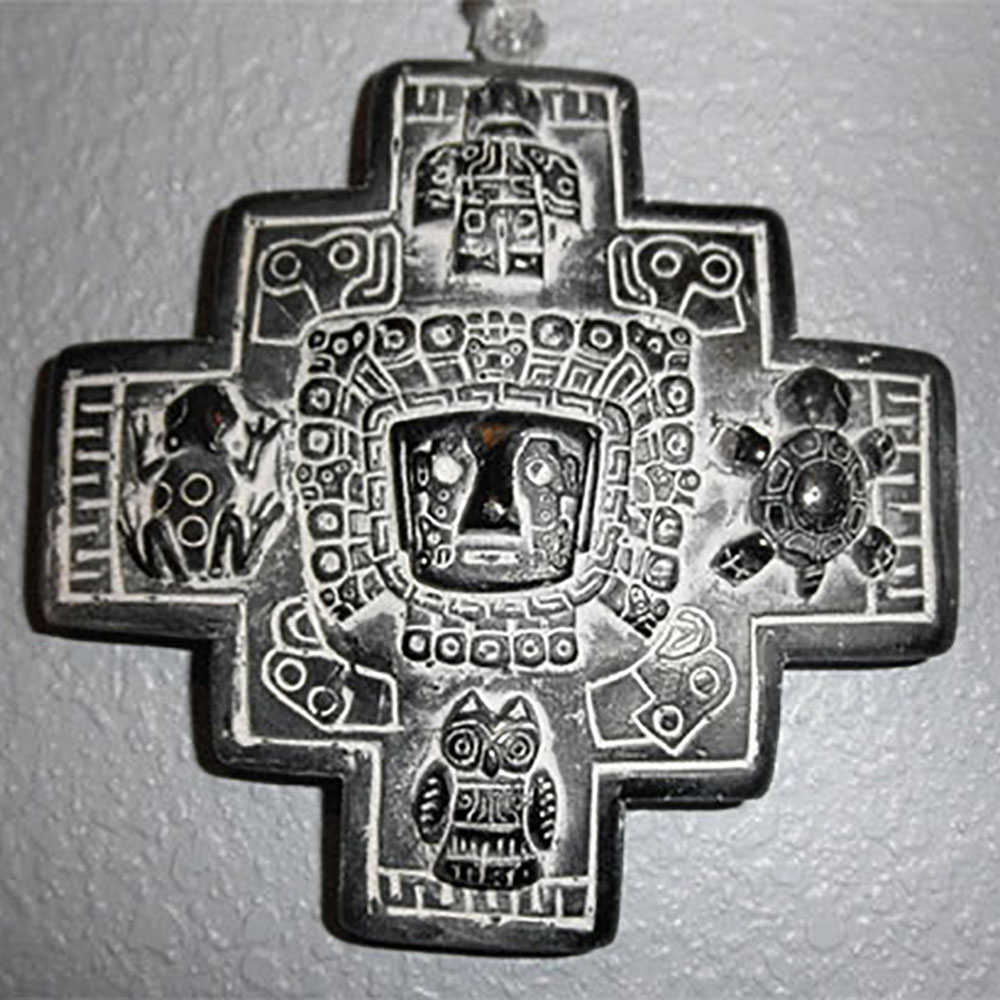
Welcome back to Peru and Its Symbols, our weekly series on the meaning woven into Andean life. Last week we explored the chakana, the Andean cross, and its three worlds, each with a guardian animal. This week we look up, to the guardian of the highest of those worlds: the Andean condor.
Meet the Andean condor
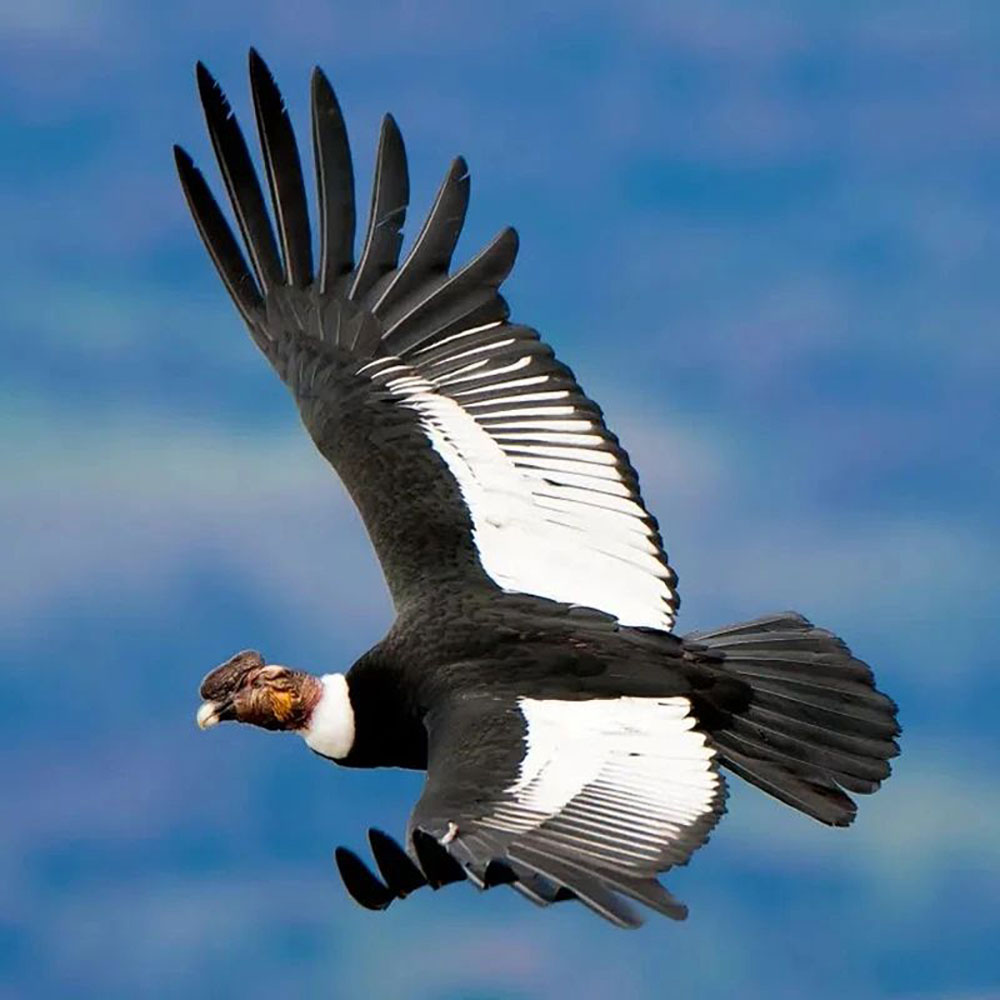
The Andean condor (Vultur gryphus) is one of the largest flying birds on Earth. Its wings can span up to 3.3 meters, almost 11 feet, and an adult can weigh around 11 to 15 kilograms. It is easy to recognize: a black body, broad white patches on the wings, a bare head and a fluffy white collar around the neck. Males also carry a fleshy crest on top of the head.
For a bird so large, the condor moves with remarkable ease. It rarely flaps its wings at all. Instead, it rides rising currents of warm air and mountain winds, gliding for hours along cliffs and valleys while barely moving. Condors are scavengers, feeding mainly on carcasses, which gives them an important role in keeping the mountain ecosystem clean.
The condor is also one of the longest-living birds. Individuals can live well over 50 years, and some in zoos have passed 70. Pairs mate for life and usually raise a single chick every two years, which is part of why the species recovers so slowly.
Where does the name come from?
The English word “condor” comes from the Quechua kuntur, the name the Andean peoples have used for this bird for centuries. The name still echoes across the Andes in place names, family names and songs.
Guardian of Hanan Pacha, the upper world
In the Andean view of the cosmos, the universe has three levels: Hanan Pacha, the upper world of the sun, moon, stars and the gods; Kay Pacha, the world we live in; and Uku Pacha, the inner world below. Each has a guardian animal, and the condor belongs to the highest.
Because it flies higher than any other bird of the Andes and seems to touch the sky, the condor was seen as a link between the world of people and the world above. Many Andean traditions describe it as a messenger that carries prayers upward and brings signs back down. It has long been associated with the sun, and in some traditions the condor accompanies the spirits of the dead on their journey to the upper world.
The condor also stands for qualities people admire: strength, vision, freedom and a wide perspective, the ability to see the whole landscape from above. Together with the puma of Kay Pacha and the serpent of Uku Pacha, it forms the sacred trio that appears again and again in Andean art and belief.
The condor in ancient Peru
The condor appears in Andean art for thousands of years before the Inca. Bird imagery with condor features is found in the stone carvings of Chavín culture, and one of the best-known figures among the Nazca Lines in southern Peru is a giant condor drawn on the desert floor, its wings spread wide.
At Machu Picchu, visitors can see the so-called Temple of the Condor. Natural rock formations, shaped and finished by Inca builders, resemble a condor’s outstretched wings, while a carved stone on the ground is read as the bird’s head and white collar. It is one of the clearest examples of how the Inca blended the landscape itself with sacred meaning.
The condor in Peru today
The condor remains one of the most powerful symbols of Andean identity. It is a national symbol across several Andean countries, and in Peru it lives on in music, dance, textiles and jewelry. (Peru’s official national bird, in fact, is a different species: the bright red Andean cock-of-the-rock.)
Its most famous tribute is the song El Cóndor Pasa, composed by the Peruvian musician Daniel Alomía Robles in 1913 as part of a zarzuela and declared part of Peru’s National Cultural Heritage in 2004. The melody traveled the world, especially after Simon & Garfunkel recorded their version, “El Cóndor Pasa (If I Could),” in 1970.
In some highland towns, the condor also appears in traditional festivals, among them the Yawar Fiesta, a ritual that symbolically pairs the Andean condor with the Spanish bull. These celebrations carry deep cultural meaning and are also the subject of ongoing debate about the welfare of the birds involved.
Where to see condors in Peru
The most famous place to see wild condors is the Colca Canyon in the Arequipa region, one of the deepest canyons in the world. At the Cruz del Cóndor viewpoint, visitors gather in the morning, when the air begins to warm and the condors rise from the canyon on the thermals, sometimes passing just a few meters overhead. It is an unforgettable sight, and the best way to understand why the Andean peoples saw this bird as a bridge to the sky.
A symbol that needs protection
The Andean condor is listed as Vulnerable by the International Union for Conservation of Nature, and only around 10,000 remain in the wild. Poisoning, hunting and habitat loss are its main threats, and because condors breed so slowly, every bird counts. Conservation programs across the Andes are working to protect them, and responsible tourism in places like the Colca Canyon helps local communities value living condors.
Bringing the spirit of the condor home
For the Andean peoples, the condor is a reminder to keep a wide view of life, to stay connected to something greater, and to honor the bond between earth and sky. That same spirit lives in the work of Andean artisans, from the silversmiths of Peru to the weavers of fine alpaca. Explore our Ilaria jewelry, handcrafted in Peru, and our alpaca capes and ponchos to bring a piece of the Andes home.
Next week in Peru and Its Symbols: the puma, guardian of the world we live in.